Get Healthy!
- Posted March 23, 2026
A Nasal Swab for Alzheimer's? Duke Team Has One in Testing
Detecting the first signs of Alzheimer’s disease may one day be as easy as swabbing the inside of your nose.
An experimental swab, patented by Duke Health, picked up early changes in nerve and immune cells even before thinking and memory problems had emerged.
"If we can diagnose people early enough, we might be able to start therapies that prevent them from every developing clinical Alzheimer’s," said researcher Dr. Bradley Goldstein, a professor at Duke University School of Medicine in Durham, North Carolina.
His team recently published findings from a small and encouraging study of the nasal swab in Nature Communications.
The aim, he said, is to one day be able to "confirm Alzheimer’s very early, before damage has a chance to build up in the brain."
For the study, researchers obtained nasal samples from 22 participants.
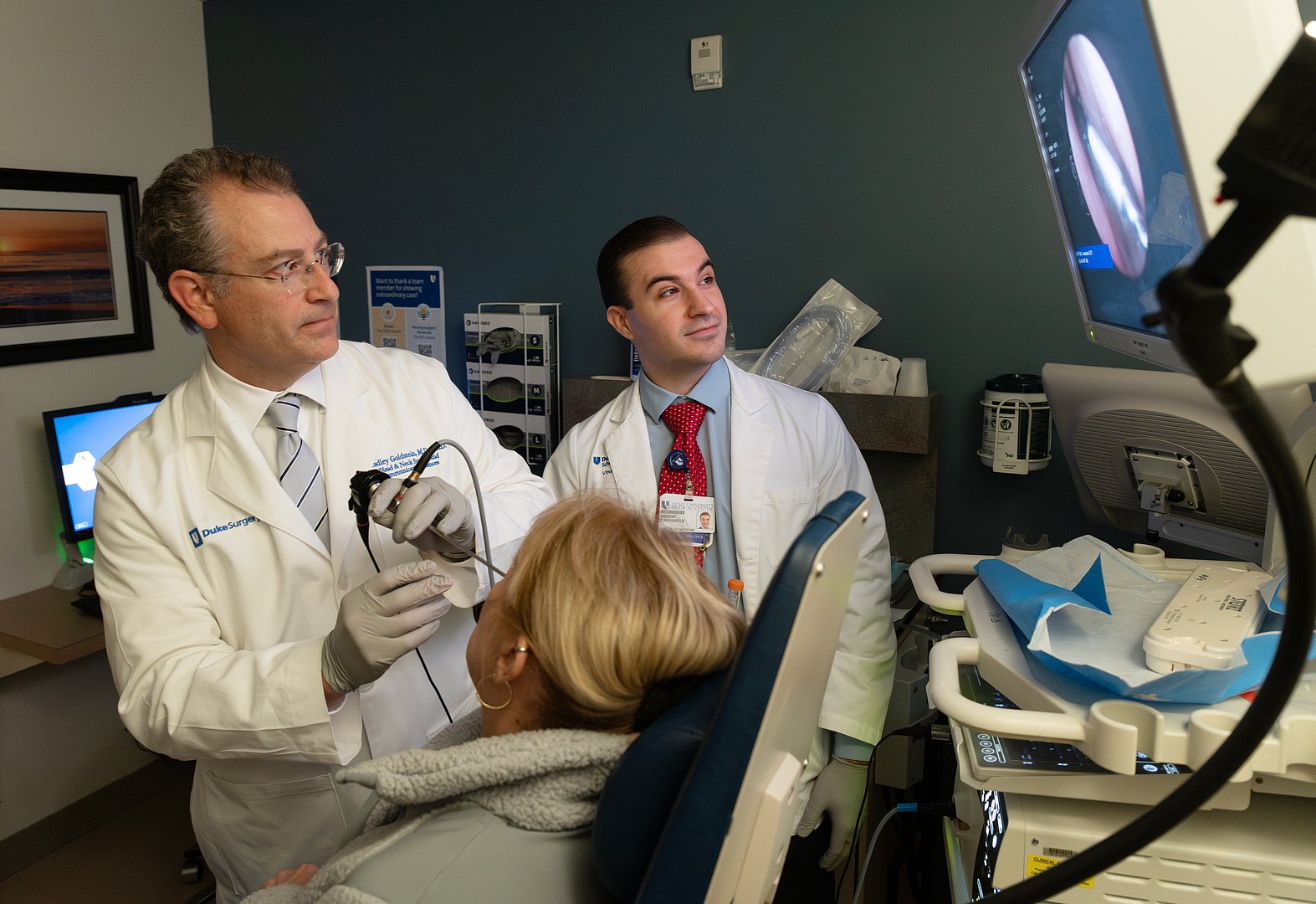
First, they applied a numbing spray, then they guided a tiny brush into the upper part of the nose, where nerve cells that detect smells reside.
From those samples, they looked at which genes were active, an indicator of activity inside the brain.
The swabs allowed them to measure the activity of thousands of genes across hundreds of thousands of individual cells, amount to millions of data points — picking up early shifts in nerve and immune cells, even in people who had lab-based signs of Alzheimer’s but no symptoms.
The upshot: The swab test correctly distinguished early and clinical Alzheimer’s from healthy controls about 81% of the time.
Alzheimer’s blood tests now in use detect markers that appear only later in the disease process, researchers said in background notes.
The nasal swab, however, captures living nerve and immune activity, which may provide a more direct look at disease-related changes and pave the way for earlier intervention.
"Much of what we know about Alzheimer’s comes from autopsy tissue," said first author Vincent D’Anniballe, a student in Duke’s medical scientist training program. "Now we can study living neural tissue, opening new possibilities for diagnosis and treatment."
Mary Umstead volunteered for the study in honor of her sister, Mariah Umstead, who died with young-onset Alzheimer’s. Mariah was just 57 when she was diagnosed, though the family had noticed signs of the disease long before.
"When the opportunity came along to be part of a research study, I just jumped at it because I would never want any family to have to go through that kind of loss that we went through with Mariah," she said. "I would never want any patient to go through what we went through either."
In collaboration with the Duke & UNC Alzheimer’s Disease Research Center, the Duke team is expanding its research to larger groups and aims to learn whether the swab could help track treatment progress over time.
The National Institutes of Health funded the study.
More information
Ohio State University Wexner Medical Center an online test for cognitive, memory or thinking problems.
SOURCE: Duke Health, news release, March 18, 2026
